
European stock markets recover - dollar heads for weekly decline
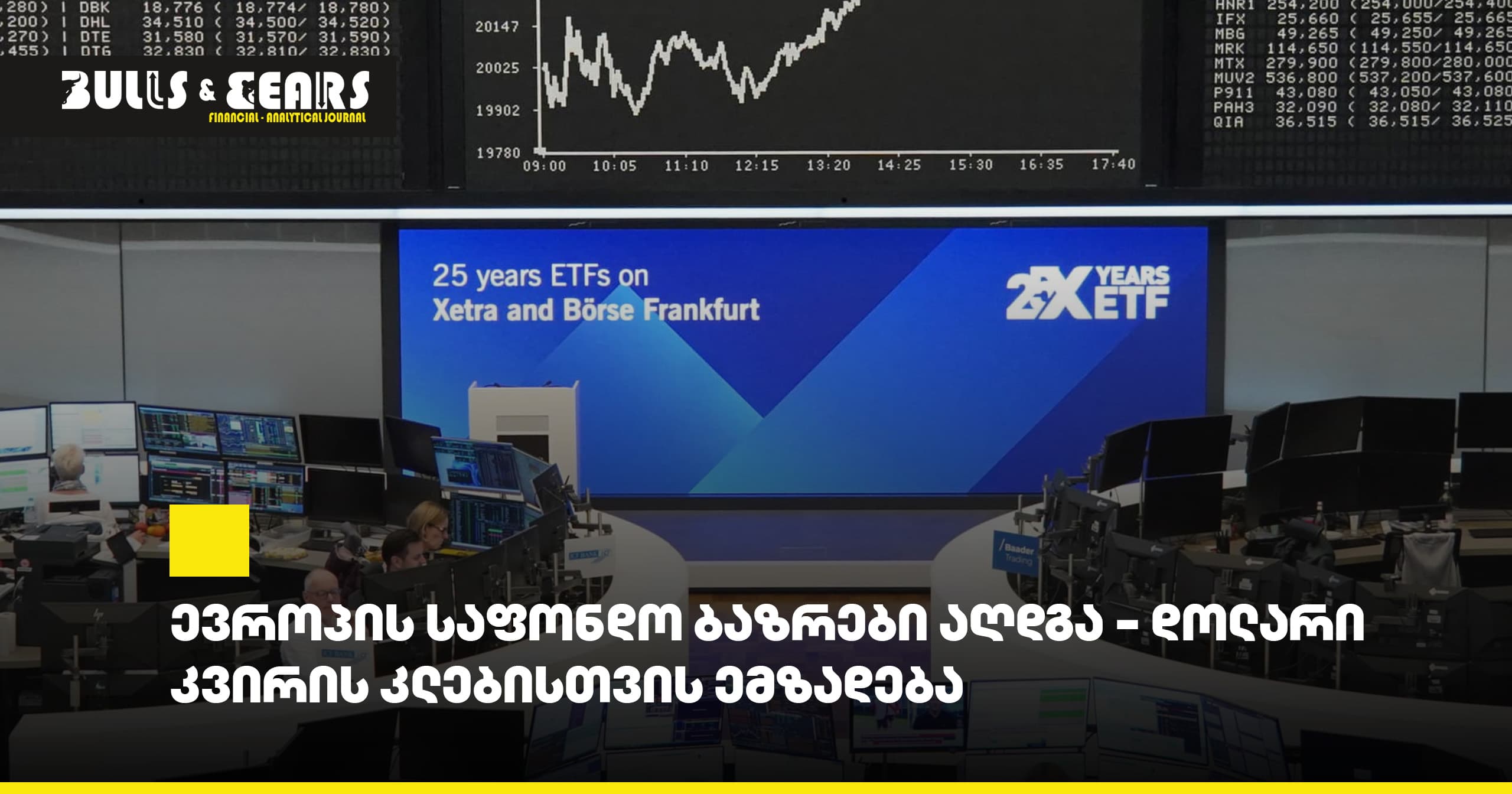
European stock markets rose on Friday, partially recovering from a sharp sell-off in technology sector shares. Meanwhile, the US dollar was heading for a weekly decline. Investor attention remains focused on the outlook for interest rates and the risks associated with financing artificial intelligence (AI) infrastructure.
Market volatility increased after higher-than-expected US inflation data released on Wednesday reinforced expectations of further interest rate hikes. At the same time, investors began selling off shares of technology and semiconductor manufacturing companies amid growing questions about whether the massive investments made in AI infrastructure would justify the returns expected in the future.
Against this backdrop, investors moved into US Treasuries and other sovereign bonds. On Friday, most Asian stock markets rose, while bond markets stabilized.
However, sharp declines were recorded in certain markets. Indonesia's stock market suffered its largest daily drop since 1998 after index provider MSCI announced that the country's market no longer met the criteria required to maintain its emerging market status. MSCI also presented plans to remove the country from several major indices.
Turkey's main stock index also fell by more than 3% after MSCI suspended certain changes to Turkish equity indices.
European markets show gains
As of 10:55 GMT, the MSCI World global stock index was up 0.4%, though it remained down on the week.
Europe's major indices showed positive momentum on Friday:
- STOXX 600 — up 0.6%;
- Germany's DAX — up approximately 1%;
- France's CAC 40 — up 0.5%;
- UK's FTSE 100 — up less than 0.1%.
US stock futures also pointed to a recovery on Wall Street. S&P 500 futures rose 0.2%, though Nasdaq futures remained in decline.
Caution toward the technology sector is being driven in particular by the growing debt of AI infrastructure companies. Investor attention is centered on data center operators such as CoreWeave, whose business model involves large-scale investments in computing capacity and significant liabilities.
"The question of monetization remains the key issue. There are still doubts about the sustainability of profits and margins for some companies in the sector," said Amélie Derambure, senior multi-asset portfolio manager at Amundi.
Nevertheless, Derambure noted that she still prefers to maintain an overweight position in US equities and expects strong corporate earnings to limit the scale of any potential market correction.
Dollar weakens as bond markets recover
The US dollar depreciated 0.4% on Friday, bringing the dollar index down to 101.65. This indicated that the dollar was set to end the week lower for the first time after three weeks of gains.
The dollar's weakness was driven by a decline in US Treasury yields, which reduced the attractiveness of the American currency. Analysts believe that further escalation of AI sector-related risks could put additional pressure on the dollar.
Amid the dollar's depreciation, the euro rose from its recent 17-month low. On Friday, it gained 0.4%, reaching $1.1257.
European government bond yields edged slightly higher on Friday, though they remained lower on the week. Germany's 10-year government bond yield stood at 3.4355%. Investors continued to view sovereign debt as a relatively safe asset, particularly amid questions about the financial sustainability of AI sector companies.
G7 government bond markets were on track for their best weekly performance since the end of May.
Meanwhile, the correlation between German bond yields and the STOXX 600's performance turned positive this week — for the first time since August. This suggests that sovereign bonds are once again regaining their function as a safe-haven asset. Throughout the year, this relationship had weakened, as inflationary risks linked to the escalation of the war in Iran led investors to believe that interest rates might remain elevated for a prolonged period.
Get our latest market analysis and financial insights delivered straight to you. No spam — just the signal.