
What Will Change After the Strait of Hormuz Opens
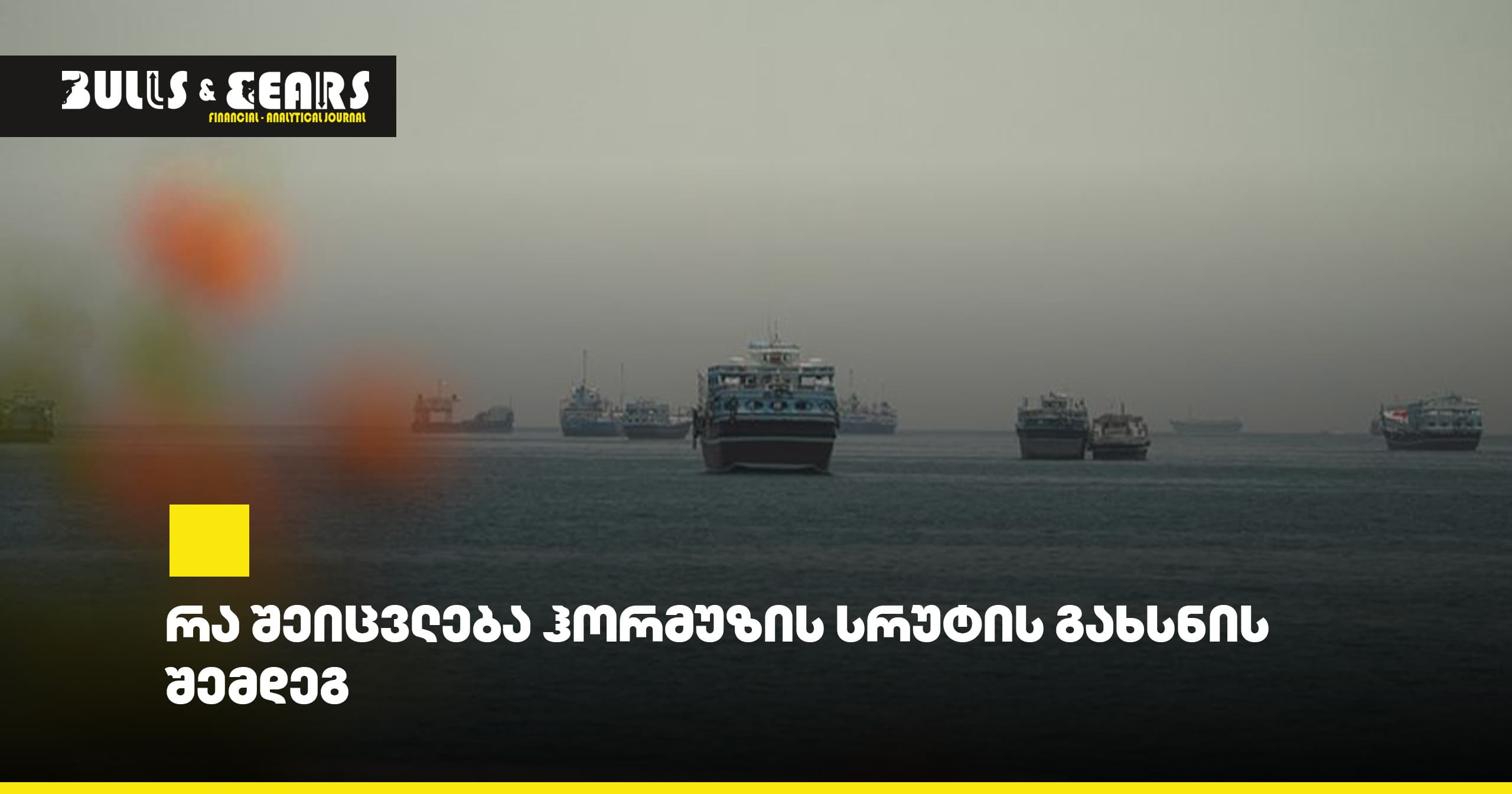
The Strait of Hormuz may reopen soon, but according to Capital Economics' assessment, it will take time for the situation on the energy market to normalize completely.
After the Strait of Hormuz reopens, tanker traffic will increase again, though Capital Economics does not expect a sharp decline in oil prices. The reason is that the volume of oil being exported to the Persian Gulf is now lower compared to June.
Another important factor is how quickly oil production recovers in the Middle East. In July, exports from the region lagged pre-war levels by approximately 9 million barrels per day. According to oil companies, full recovery of production and refining will take several months.
The situation is more complicated in Qatar, where Iranian attacks have resulted in a 17% reduction in liquefied natural gas production, and recovery is expected to take two to three years.
Global oil inventories are also significant. Member countries of the International Energy Agency have used 400 million barrels of oil from strategic reserves to cover the deficit, but this volume is expected to be depleted in early or mid-September.
According to Capital Economics' assessment, to avoid further supply shortages in the market, exports from the Middle East should increase by 2-3 million barrels per day next month. Otherwise, countries may need to draw on strategic reserves again.
The situation is also affected by reduced oil demand from China, while the U.S. is increasing exports of oil products. Additionally, analysts do not rule out that the Trump administration may consider restricting oil product exports due to high gasoline prices.
The opening of Hormuz will have some impact on the natural gas market, though a significant price decline in Europe in the near term is less likely. Against the backdrop of approaching winter, Europe's gas storage reserves are lower compared to previous years.
According to Capital Economics' forecast, Brent crude oil will trade at approximately $75 per barrel by year-end, while natural gas prices in Europe will remain in the range of 50-55 euros per megawatt-hour during winter.
Source: Investing.com
Get our latest market analysis and financial insights delivered straight to you. No spam — just the signal.