
The pound and euro strengthened against the dollar
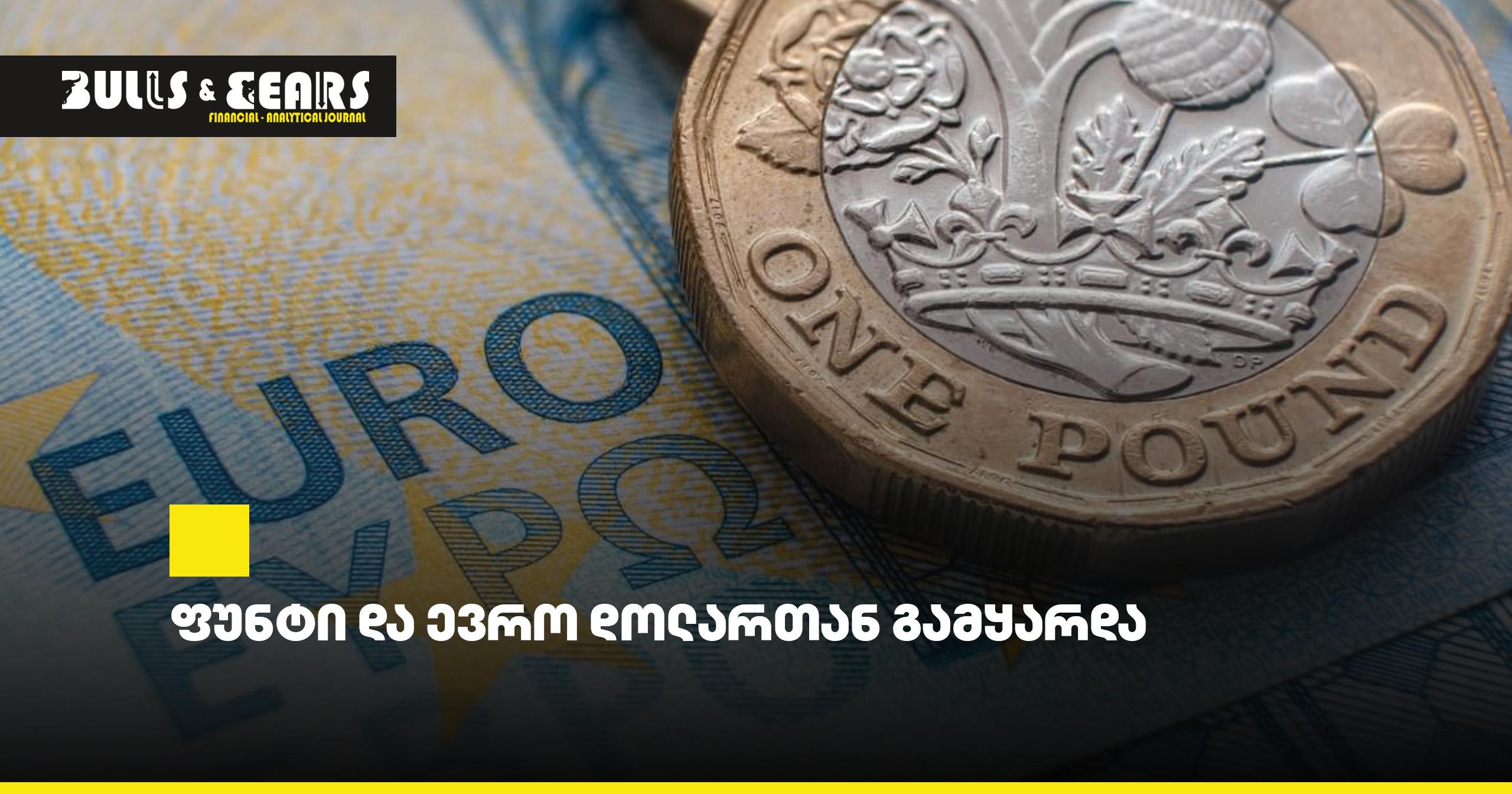
On Monday, the British pound and the euro strengthened against the dollar. The move was supported by a rise in US stock futures, which came after last week's sell-off in technology stocks.
As of 04:26 ET (09:26 GMT), the pound had gained 0.29% against the dollar to reach $1.3125, while the euro rose 0.14% to $1.0983.
According to Chris Turner, Global Head of Markets at ING, the dollar index closed trading on Friday at 103.84, having risen 0.43% over the week. In his assessment, the dollar is likely to hold onto most of the gains it has made. Meanwhile, US stock futures rose by about 2% following a nearly 9% drop in the S&P 500.
Turner noted that since 2022, when the prolonged US stock market uptrend began, market corrections have typically been short-lived, though sharp. He also assessed that the dollar, yen and Swiss franc, as defensive currencies, will remain in demand until the trend in metals prices reverses. At this stage, ING sees no need for the dollar index to fall significantly below the 103.35-103.50 level.
The dollar's outlook is also being shaped by expectations around Federal Reserve monetary policy. US Treasury Secretary Scott Bessent said over the weekend that many believe the Federal Reserve could err by tightening monetary policy too much. Markets interpreted this statement as a more cautious signal regarding interest rate increases.
However, Turner believes the market still largely expects a tight Fed policy stance. He forecasts that the October core PCE inflation data, due to be released on Wednesday, may again come in high and reinforce expectations of tighter monetary policy through 2027. Monday will also see the release of S&P's preliminary PMI indices.
For the British pound, positive factors include the Bank of England's rate hike in November and a 0.7% rise in October retail sales, which came against market expectations of no change. UK annual inflation stood at 0.5% in October, while the unemployment rate, measured according to International Labour Organization (ILO) methodology, was 4.6%.
Nevertheless, according to HSBC, the pound failed to hold onto its intraday gains on Friday and weakened 0.03% against the dollar. One reason for this is expectations of further rate hikes by the Federal Reserve. HSBC identifies $1.2933 as a support level for the pound and $1.3367 as a resistance level.
In Europe, the European Central Bank left interest rates unchanged in October. Eurozone inflation stands at 4%. EUR/USD traded in a relatively narrow range last week - between 1.0952 and 1.1033. Turner explains this is partly because investors already hold large positions on the dollar, while concentration in the options market around the 1.0850-1.0950 levels is limiting trading.
On Thursday, EU leaders are set to name the next president of the European Central Bank. On the Polymarket forecasting platform, the probability of Pablo Hernández de Cos's appointment stands at 96%. However, according to ING, the expected decision is unlikely to cause further depreciation of the euro.
ING continues to expect dollar support in the short term, though it is gradually approaching the period when seasonal factors tend to favor dollar weakness. According to Turner, if EUR/USD breaks above 1.11 this week and closes trading at that level, it would be considered a significant positive signal for the euro.
A reversal in copper and precious metals prices, or a softer tone from the Federal Reserve, could signal the end of the dollar's uptrend. According to the LSEG consensus forecast cited by HSBC, GBP/USD is expected to reach $1.3346 and EUR/USD $1.1250 by the fourth quarter.
Get our latest market analysis and financial insights delivered straight to you. No spam — just the signal.